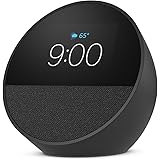
Have you ever wondered what happens when your smart speakers try to talk to each other? The intriguing video above demonstrates a fascinating interaction, showcasing an infinite loop conversation between an Alexa-powered device and a Google Home speaker. This unique scenario highlights how these popular voice assistants interpret commands and react to their environment, creating a continuous back-and-forth dialogue.
Observing this delightful digital exchange provides a clear glimpse into the foundational mechanics of smart speaker technology. While it might seem like a sophisticated conversation, it is actually a clever sequence of triggers and responses. Understanding this “Alexa and Google Home loop” helps us appreciate both the ingenuity and current limitations of our voice-activated devices in the home.
Understanding the Smart Speaker Conversation Loop
The core of the interaction seen in the video lies in the devices’ ability to recognize their respective wake words. Initially, a human voice prompts Google Assistant to repeat a specific phrase. This phrase is carefully crafted to include Alexa’s wake word, setting the stage for the continuous dialogue observed in the demonstration. Once the Google device vocalizes “Alexa, Simon says, Hey Google, repeat that,” a fascinating chain reaction begins.
Each device is designed to listen for its own trigger phrase, such as “Alexa” or “Hey Google.” When one smart speaker says the other’s wake word, it activates that device. The activated device then processes the subsequent command, which, in this ingenious setup, includes the other’s wake word again. This creates a perpetual cycle, a true smart speaker infinite loop where each assistant is constantly triggering the other, much to our amusement.
How Wake Words Initiate Voice Assistant Interactions
Wake words are essential for the functionality of all voice assistants, serving as the unique verbal key to activate a device. For Amazon’s smart speakers, this phrase is typically “Alexa,” while Google’s devices respond to “Hey Google” or “Okay Google.” These specific audio cues are what differentiate idle listening from active command processing, making them incredibly important in daily operation.
These devices are always passively listening for their designated wake word using sophisticated sound recognition algorithms. They continuously analyze incoming audio streams, awaiting that precise acoustic signature. Only upon detecting the correct wake word do they then begin recording and interpreting the subsequent user command, transitioning from standby to an active listening state.
The careful design of distinct wake words prevents constant accidental activation in multi-device households. Imagine the chaos if both devices reacted to every casual mention of a name or common word. This system ensures that only the intended device responds, maintaining order within your smart home ecosystem and streamlining your experience with voice commands.
The Mechanics Behind Smart Speaker Echo Effects
The “echo effect” witnessed in the video is a prime example of how current AI assistants process information. It is not a true understanding or a conscious dialogue between the devices themselves. Instead, it is a sequential reaction to auditory inputs, demonstrating their rule-based programming rather than genuine artificial intelligence.
When Google Assistant repeats the phrase “Alexa, Simon says, Hey Google, repeat that,” the word “Alexa” acts as the immediate trigger for the Amazon device. The Alexa device then interprets the rest of the sentence, “Simon says, Hey Google, repeat that,” as its new command. Crucially, Alexa doesn’t “know” it’s speaking to another smart device; it simply executes the instruction to repeat the provided phrase, thereby activating Google Assistant once more.
This cycle continues because each device is simply fulfilling its programmed command to repeat a specific phrase. The spoken phrase contains the wake word for the other assistant, effectively restarting the loop. This clever trick, orchestrated by the user’s initial command, showcases a fascinating aspect of voice assistant interaction and their current processing capabilities.
The “Repeat After Me” Command and Its Role
The “repeat after me” command is a powerful feature that allows users to make their voice assistants vocalize almost any string of words. In this particular infinite loop, it is the fundamental tool that enables the clever embedding of wake words. This simple command proves surprisingly versatile for various humorous or experimental purposes within the smart home environment.
By telling Google Assistant to “repeat after me, Alexa, period, Simon says, comma, Hey Google, comma, repeat that,” the user essentially programs a self-perpetuating prompt. Google then articulates this exact phrase, which includes “Alexa,” triggering the Amazon device. This method elegantly bypasses the need for complex programming, relying instead on straightforward verbal instruction.
The comma and period instructions are particularly interesting because they ensure the natural pacing and intonation of the repeated phrase. This subtle but important detail helps the subsequent device recognize its wake word and the following command clearly. Without proper punctuation, the spoken sentence might sound rushed or jumbled, potentially breaking the desired smart speaker interaction loop.
Exploring the Limitations of Current AI Assistants
This mesmerizing smart speaker infinite loop perfectly illustrates a key characteristic of current artificial intelligence: its reliance on predefined rules and patterns. While these voice assistants appear remarkably intelligent, they are fundamentally operating within programmed parameters. They respond to specific keywords and commands without possessing genuine comprehension or self-awareness in the way humans do.
Neither Alexa nor Google Assistant truly “understands” that it is engaged in a conversation with another AI device. Their programming does not include a protocol for inter-assistant dialogue or recognition of another digital entity. Each device simply processes its wake word and executes the subsequent command independently, oblivious to the bigger picture of the continuous exchange.
This limitation means that while they can perform complex tasks, they lack contextual understanding beyond their immediate programming. They cannot initiate a new topic, ask clarifying questions outside of predefined scripts, or truly “learn” from an ongoing conversation. The infinite loop is a testament to clever human input rather than advanced machine consciousness or sentient interaction.
Unintended Interactions in Smart Home Devices
The smart speaker infinite loop is an example of an “unintended interaction” rather than a bug or malfunction. It highlights how the independent functionalities of different smart devices can sometimes intersect in unexpected ways. These fascinating occurrences often emerge from users pushing the boundaries of what their technology can do.
Similar unintended interactions can sometimes occur with other smart home devices as well. For instance, a smart TV’s audio output might accidentally trigger a nearby voice assistant if a show mentions its wake word. This is why careful placement and understanding of your devices’ sensitivities are sometimes beneficial for avoiding accidental activations.
These interactions, while sometimes amusing or quirky, serve as excellent learning opportunities about our smart technology. They remind us that these devices, despite their advanced capabilities, are still tools operating on logical inputs and outputs. Understanding these principles helps us better integrate and control our smart home ecosystems effectively.
Experimenting with Your Own Voice Assistants Safely
Witnessing the Alexa and Google Home loop can inspire curiosity about your own smart speaker’s capabilities. Experimenting with voice commands and interactions is a fun way to learn more about how your devices function. You can explore various phrases and commands to see how your digital assistants respond in different scenarios.
If you wish to try creating a similar loop, remember to use the “repeat after me” command, carefully embedding the wake word of your second device. Start with low volume settings to avoid startling yourself or causing audio feedback. Ensure your devices are placed in close proximity but not directly facing each other, which can sometimes lead to confusion in sound recognition.
While exploring the boundaries of your smart technology, always be mindful of privacy and data security. Avoid having your smart speakers repeat any sensitive personal information or financial details. These experiments are best kept to lighthearted phrases, ensuring your interactions remain both fun and secure within your home environment.
Exploring these quirky interactions, like the smart speaker infinite loop, offers a delightful insight into the world of voice AI. It showcases the intricate dance of wake words and commands that define our daily interactions with devices like Alexa and Google Home. Understanding these mechanisms enhances our appreciation for smart technology while reminding us of its unique and often amusing capabilities.
Interrupting the Infinite Dialogue: Your Questions Answered
What is the ‘infinite loop conversation’ between Alexa and Google Home?
It’s when an Alexa device and a Google Home speaker get stuck in a continuous back-and-forth dialogue. Each speaker triggers the other to speak by saying its ‘wake word’ within a repeated command.
How do smart speakers like Alexa and Google Home know when to listen for commands?
They listen for specific ‘wake words,’ such as ‘Alexa’ or ‘Hey Google.’ When a device hears its unique wake word, it then starts actively processing the following voice command.
Why does this ‘infinite loop’ happen between the devices?
It occurs because a user gives one speaker a command to repeat a phrase that contains the other speaker’s wake word and a new instruction. This causes each device to activate the other in an ongoing cycle.
Is the smart speaker loop a malfunction or a bug?
No, it’s not a bug. It’s an example of an ‘unintended interaction’ that demonstrates how smart speakers follow their programmed rules, rather than possessing genuine understanding or self-awareness.
Can I try to create an infinite loop with my own smart speakers safely?
Yes, you can by using the ‘repeat after me’ command and carefully embedding the wake word of your second device into the phrase. Remember to start at a low volume and place devices nearby but not directly facing each other.